Engineered Wood Flooring Vs LVT Flooring
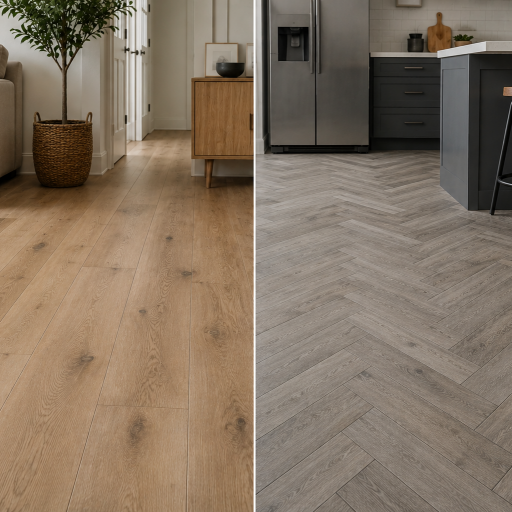
There’s a moment in almost every renovation when the practical questions catch up with the exciting ones. You’ve chosen a paint colour, settled on a sofa, maybe even picked out the dining table. Then you get to the floor, and suddenly you’re comparing materials you hadn’t given much thought to before.
Engineered wood flooring and luxury vinyl tile, better known as LVT, are two of the most popular choices in British homes today and, at first glance, they can look surprisingly similar. Both come in a wide range of colours and finishes, both promise durability and both work well in busy households. Beneath the surface, they’re built for very different reasons.
If you’re choosing flooring that you’ll live with for years rather than just admire on installation day, it’s worth understanding where each option shines, where it asks for compromise, and why engineered wood often feels like the more natural long-term choice.
Two Floors, Two Very Different Materials
Although they’re often compared, engineered wood flooring and LVT have very little in common once you look beyond appearance.
Engineered wood is made using a real hardwood surface (known as the ‘wear layer’), typically oak, supported by multiple layers of stable plywood or high-density fibreboard. The result is a genuine timber floor that combines natural character with improved stability (in fact, most buyers these days prefer it to the unrelenting nature of 100% wood).
LVT, on the other hand, is a synthetic flooring product. It’s manufactured from layers of vinyl, with a high-resolution printed image designed to replicate wood, stone or other natural materials. A clear wear layer sits on top to protect the printed design from everyday wear.
Both have their place. The choice comes down to whether you’re looking for the feel and ageing of real wood or the convenience of a manufactured alternative. For us, engineered wins all day long, but to be honest, we can see how people looking for absolute precision and uniformity could be swayed by vinyl.
Appearance Goes Beyond First Impressions
Modern LVT has come a long way. Advances in printing and embossing mean some designs are impressively realistic, especially from a distance. That’s the case with laminate too.
Up close, though, the differences become easier to spot. Real wood has subtle variations that simply can’t be repeated perfectly. Grain patterns shift naturally from board to board, knots appear where you’d expect them to and light catches the surface differently throughout the day, giving the floor a sense of movement that’s difficult to imitate.
That’s one reason many homeowners continue to choose engineered oak flooring. The beauty comes from the timber itself rather than a printed finish.
LVT can certainly create the look of wood. Engineered wood gives you the real thing.
How Each Floor Feels Underfoot
It’s easy to focus on how flooring looks, but how it feels matters just as much. After all, you’ll walk across it every day.
Engineered wood has a natural warmth and slight softness that comes from real timber. It feels substantial underfoot and develops a character that’s difficult to describe until you’ve lived with it.
LVT is generally softer than ceramic tiles and quieter than laminate, but it still feels like a manufactured material. The surface temperature tends to follow the room more closely, and while modern products include textured finishes, they don’t quite recreate the tactile feel of genuine wood.
It’s a subtle difference, but one that becomes more noticeable over time than it does in a showroom.
Moisture Is Where LVT Comes Into Its Own
One area where LVT genuinely has an advantage is water resistance. As it’s made from vinyl, which is waterproof, it’s well suited to bathrooms, utility rooms and spaces where standing water is more likely.
Engineered wood is far more stable than solid timber, but it’s still made with real wood. Spills aren’t usually a problem if they’re cleaned up promptly, but prolonged exposure to water should always be avoided. The Wood Flooring Association recommends maintaining stable moisture conditions for all timber flooring to protect its long-term performance.
For kitchens, living rooms, hallways and bedrooms, engineered wood performs exceptionally well. In bathrooms though, LVT is often the safer choice.
Underfloor Heating? Both Work Well
Underfloor heating is becoming increasingly common, especially during renovations.
The good news is that both engineered wood flooring and LVT are generally compatible with modern underfloor heating systems, provided they’re installed according to the manufacturer’s guidance.
Engineered flooring is specifically designed to remain stable as temperatures change, making it an excellent partner for underfloor heating. Collections such as our engineered flooring suitable for underfloor heating are built with this in mind.
LVT also conducts heat efficiently, thanks to its relatively thin construction. The Energy Saving Trust recommends choosing floor finishes that allow heat to transfer effectively while remaining dimensionally stable, making both materials suitable choices when specified correctly.
Everyday Durability Looks Different Depending On The Material
Both flooring types are designed to cope with busy homes, but they age in different ways. LVT is highly resistant to scratches, dents and stains making it a practical option for homes with young children, pets or particularly heavy foot traffic.
Engineered wood is durable too, especially when finished with quality lacquer or oil. The difference is that small marks become part of the floor’s story rather than damage to a printed surface. Over time, timber develops a lived-in appearance that many people find appealing. A few scuffs or gentle signs of wear often add warmth rather than taking anything away.
And if the floor eventually needs refreshing, engineered wood offers something LVT cannot. Depending on the thickness of the wear layer, engineered floors can be sanded and refinished a number of times to bring them back to life.
A Floor That Can Grow Older Gracefully
One of engineered wood’s biggest advantages is its longevity. High-quality boards with a generous wear layer can be sanded and refinished several times, bringing the surface back to life without replacing the floor.
LVT can’t be refinished in the same way. Once the wear layer is damaged or the printed design wears through, replacement is usually the only option.
The British Woodworking Federation notes that the lifespan of timber flooring depends heavily on maintenance, but quality engineered boards can provide decades of service when properly cared for.
It’s the difference between restoring something and replacing it.
Installation Is Easier Than It Used To Be
Years ago, timber flooring often required lengthy installation and careful preparation. Today though, engineered wood is much more adaptable.
Many products can be floated over quality underlay, glued directly to concrete subfloors or installed as part of straightforward renovation projects. In fact, we recommend most floors are laid using a ‘floating floor’ method, which means there’s no gluing down required, at most, you’ll need to glue tongue and groove joints, that’s it.
LVT is similarly versatile, with both click-fit and glue-down options widely available.
Either way, a level, clean and tidy subfloor makes all the difference. In other words, good preparation usually matters more than the product.
Cost Isn’t Always As Different As People Expect
LVT often has a lower upfront cost, particularly at entry level.
Engineered wood typically requires a larger initial investment, especially if you’re choosing wider planks or premium oak grades.
But cost isn’t simply about purchase price.
Engineered flooring can add long-term value through its longevity, ability to be refinished and timeless appearance. It also tends to age in a way that suits changing interiors rather than needing to be replaced as styles evolve.
For many homeowners, that’s where the value starts to shift.
Which Flooring Suits Your Home?
LVT makes a great choice if:
- You need completely waterproof flooring.
- You’re fitting out a bathroom or utility room.
- Low maintenance is your highest priority.
- You want a convincing wood look at a lower initial cost.
Engineered wood often feels like the better fit if:
- You want genuine timber underfoot.
- You’re renovating living spaces, bedrooms or hallways.
- You’d like a floor that develops character over time.
- Long-term value matters more than the lowest purchase price.
- You’re looking for a wide choice of natural finishes.
A Floor You’ll Still Enjoy Years From Now
Engineered wood flooring and LVT both solve different problems, and that’s why they’ve become such popular choices.
LVT is practical, resilient and wonderfully easy to live with, particularly in spaces where moisture is part of everyday life, whilst engineered wood offers something more subtle. It brings warmth that isn’t manufactured, texture that changes with the light, and the reassurance that the surface beneath your feet is exactly what it appears to be.
For most living spaces, that’s why engineered wood often edges ahead. Not because LVT falls short, but because real timber has a way of making a room feel settled from the very beginning, and even better as the years pass.
