Engineered Wood Flooring Vs LVT Flooring
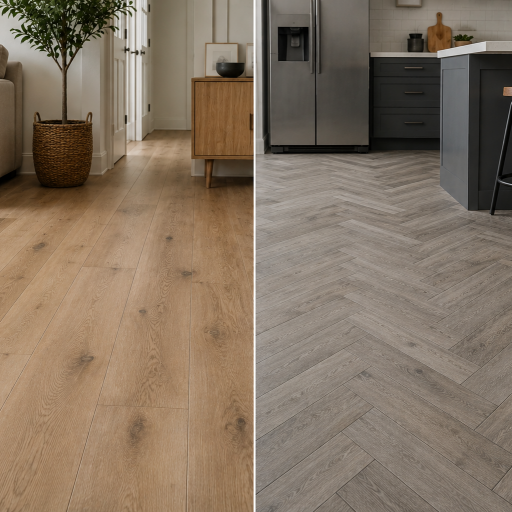
There’s a moment in almost every renovation when the practical questions catch up with the exciting ones. You’ve chosen a paint colour, settled on a sofa, maybe even picked out the dining table. Then you get to the floor, and suddenly you’re comparing materials you hadn’t given much thought to before.
Engineered wood flooring and luxury vinyl tile, better known as LVT, are two of the most popular choices in British homes today and, at first glance, they can look surprisingly similar. Both come in a wide range of colours and finishes, both promise durability and both work well in busy households. Beneath the surface, though, they’re built for very different reasons.
If you’re choosing flooring that you’ll live with for years rather than just admire on installation day, it’s worth understanding where each option shines, where it asks for compromise, and why engineered wood often feels like the more natural long-term choice.
The short answer? Engineered wood is generally our pick for living rooms, bedrooms, hallways and most kitchens, particularly if you love the look and feel of real timber. LVT has the advantage in bathrooms, utility rooms and anywhere regular exposure to water is a concern.
There’s a little more to it than that, of course.
Engineered Wood vs LVT Flooring: At a Glance
Before getting into the details, here’s how the two compare.
| Feature | Engineered Wood Flooring | LVT Flooring |
|---|---|---|
| Material | Real hardwood surface over a layered core | Synthetic vinyl with a printed design |
| Appearance | Natural, unique wood grain | Printed wood or stone effect |
| Water resistance | Handles occasional spills, but not standing water | Highly water-resistant; many products are waterproof |
| Scratch resistance | Depends on timber species and finish | Often more resistant to everyday surface scratches |
| Underfloor heating | Suitable with approved products | Suitable with approved products |
| Lifespan | Can last for decades with proper care | Varies by product quality, wear and installation |
| Refinishing | Possible on suitable boards with sufficient wear layer | Cannot be sanded and refinished |
| Maintenance | Regular cleaning and occasional specialist care | Generally straightforward to maintain |
| Installation | Floating or glue-down, depending on product | Click-fit or glue-down |
| Upfront cost | Generally higher | Often lower, especially at entry level |
| Best suited to | Living rooms, bedrooms, hallways and suitable kitchens | Bathrooms, utility rooms and busy, moisture-prone spaces |
Both are perfectly sensible flooring choices. The difference is in what you want from the finished room, how you use it and how long you expect the floor to stay.
Two Floors, Two Very Different Materials
Although they’re often compared, engineered wood flooring and LVT have very little in common once you look beyond appearance.
Engineered wood is made using a real hardwood surface (known as the wear layer), typically oak, supported by multiple layers of plywood or another engineered core. The result is a genuine timber floor that combines natural character with improved stability.
That layered construction is important. Wood naturally responds to changes in temperature and humidity, and the engineered core helps reduce the amount of movement compared with a traditional solid wood board.
LVT, on the other hand, is a synthetic flooring product. It’s manufactured using vinyl-based materials, with a high-resolution printed image designed to replicate wood, stone or other natural finishes. A clear protective wear layer sits on top to help the floor cope with everyday use.
You’ll also come across different types of LVT, including flexible glue-down tiles and more rigid click-fit planks. They share the same basic idea, but their construction and installation requirements can differ.
Both have their place. The choice comes down to whether you’re looking for the feel and ageing of real wood or the convenience of a manufactured alternative.
For us, engineered wins all day long in the right room. But we can see why people looking for something particularly practical, uniform and water-resistant might be swayed by vinyl.
Appearance Goes Beyond First Impressions
Modern LVT has come a long way. Advances in printing and embossing mean some designs are impressively realistic, especially from a distance. That’s the case with laminate too.
Up close, though, the differences become easier to spot.
Real wood has subtle variations that simply can’t be repeated perfectly. Grain patterns shift naturally from board to board, knots appear where you’d expect them to and light catches the surface differently throughout the day, giving the floor a sense of movement that’s difficult to imitate.
That’s one reason many homeowners continue to choose engineered oak flooring. The beauty comes from the timber itself rather than a printed finish.
With LVT, the appearance is created during manufacturing. Even very convincing products use a collection of printed patterns, so you may notice repeated grain designs across a larger floor.
That’s not necessarily a bad thing. If you’re after a consistent colour and a very uniform finish, it might be exactly what you want.
But if you like the small differences that make natural materials interesting, engineered wood has the advantage.
LVT can certainly create the look of wood. Engineered wood gives you the real thing.
How Each Floor Feels Underfoot
It’s easy to focus on how flooring looks, but how it feels matters just as much. After all, you’ll walk across it every day.
Engineered wood has a natural warmth and a substantial feel that comes from real timber. There’s something about walking on a genuine wooden surface that a printed alternative doesn’t quite capture.
LVT is generally softer underfoot than ceramic tiles and can be quieter than some harder flooring types, although the exact feel depends on its construction, underlay and subfloor.
Engineered wood can feel firm and reassuringly solid, particularly when properly installed. LVT often has a little more give, which some people prefer in rooms where they’re standing for longer periods.
Neither material is automatically quieter or warmer in every home. Installation methods, insulation and the surface beneath the flooring all make a difference.
It’s worth getting samples of both and actually walking on them, ideally over a similar surface to the one you have at home.
You might find the decision becomes much easier once you’ve experienced the difference.
Moisture Is Where LVT Comes Into Its Own
One area where LVT genuinely has an advantage is water resistance.
Many LVT products are marketed as waterproof, making them well suited to bathrooms, utility rooms and spaces where spills or splashes are more likely.
There’s an important distinction here, though. A waterproof plank doesn’t automatically mean a waterproof floor. Water can still find its way through joints or around the edges if the installation hasn’t been properly designed for wet conditions.
Engineered wood is far more stable than solid timber, but it’s still made with real wood. Spills aren’t usually a problem if they’re cleaned up promptly, but prolonged exposure to moisture should always be avoided.
Too much water can lead to swelling, cupping or damage to the finish, particularly if moisture gets into the joints or beneath the boards.
For kitchens, living rooms, hallways and bedrooms, engineered wood can perform exceptionally well when correctly specified and maintained.
In bathrooms, though, LVT is often the safer choice.
Is Engineered Wood or LVT Better for Kitchens?
This is where the decision becomes a little more interesting.
Kitchens are busy spaces, but they aren’t necessarily wet rooms. There’s a big difference between the occasional splash from the sink and a floor that’s regularly exposed to standing water.
If you love the appearance of natural oak and you’re happy to wipe up spills as they happen, engineered wood can be a lovely choice for a kitchen. It also works particularly well in open-plan homes where you want the same flooring running through the kitchen, dining and living areas.
LVT makes more sense if you’re expecting frequent spills, want minimal maintenance or simply don’t want to worry about water around the sink and dishwasher.
One thing worth remembering is that neither floor will enjoy a leaking appliance. Even where the LVT itself is waterproof, water trapped underneath can still cause problems with the subfloor.
For most kitchens, it comes down to how you use the space and how much maintenance you’re comfortable with.
Underfloor Heating? Both Work Well
Underfloor heating is becoming increasingly common, especially during renovations.
The good news is that both engineered wood flooring and LVT are generally compatible with modern underfloor heating systems, provided they’re installed according to the manufacturer’s guidance.
Engineered flooring is designed to offer greater dimensional stability than solid timber, making suitable products an excellent partner for underfloor heating.
LVT also transfers heat effectively, thanks to its relatively thin construction, although performance depends on the particular product and what’s installed beneath it.
There are a few things to check before choosing either material.
With engineered wood, make sure the boards are approved for underfloor heating, check the permitted floor surface temperature and follow the recommended installation method. Many manufacturers specify a maximum surface temperature of around 27°C, but the product’s own instructions should always take priority.
With LVT, temperature limits matter too. Excessive heat can affect the flooring or its adhesive, so the correct product and installation system are essential.
It’s also worth considering the underlay. A thick or highly insulating underlay can slow down heat transfer, which isn’t ideal when you’re trying to warm the room efficiently.
If you’re planning a renovation around underfloor heating, the Energy Saving Trust is a useful starting point for broader advice on home heating and energy efficiency.
Neither flooring type should be chosen on compatibility alone. The important thing is making sure the entire floor build-up works with your heating system.
Everyday Durability Looks Different Depending on the Material
Both flooring types are designed to cope with busy homes, but they age in different ways.
LVT is often highly resistant to everyday scratches, stains and scuffs, making it a practical option for homes with young children, pets or particularly heavy foot traffic.
That doesn’t mean it’s indestructible. Heavy furniture can leave indentations, sharp objects can damage the surface and grit carried in from outside can gradually wear away the protective layer.
Engineered wood is durable too, especially when finished with a quality lacquer or oil.
The difference is that marks on real timber often become part of the floor’s character. Over time, wood develops a lived-in appearance that many people find appealing. A few scuffs or gentle signs of wear can add warmth rather than taking anything away.
Of course, there’s a limit to that. Deep scratches and dents are still damage, and nobody particularly enjoys dropping something heavy onto a new oak floor.
But engineered wood has an advantage when it comes to longer-term restoration.
Depending on the thickness of the wear layer and the board’s construction, some engineered floors can be sanded and refinished to bring the surface back to life.
LVT doesn’t offer that option.
Which Flooring Is Better for Dogs and Pets?
If you’ve got a dog, particularly one with enthusiastic claws and a habit of charging towards the front door, flooring durability suddenly becomes a much more important conversation.
LVT can be a sensible choice because of its resistance to everyday scratches and its ability to cope with muddy paws and occasional accidents.
Engineered wood can work well in homes with pets too, but it’s worth choosing carefully.
A durable finish, a suitable wood grade and a little attention to cleaning can make a big difference. Brushed or textured oak can also be more forgiving visually than a perfectly smooth, glossy surface.
Whichever material you choose, keeping claws trimmed, using mats at entrances and cleaning up grit will help protect the floor.
For a busy household with pets, LVT may win on convenience. If you prefer real timber and don’t mind the occasional mark, engineered wood is still very much in the running.
A Floor That Can Grow Older Gracefully
One of engineered wood’s biggest advantages is its longevity.
High-quality boards with a sufficiently thick hardwood wear layer can last for decades when they’re installed and maintained properly.
Some can also be sanded and refinished, although the number of times depends on the wear layer thickness, the board’s construction and the condition of the floor.
It’s important not to assume every engineered floor can be sanded several times. Thinner wear layers may have limited refinishing potential, while some products aren’t suitable for conventional sanding at all.
That’s why the specification matters just as much as the appearance when you’re comparing engineered wood flooring.
LVT can’t be refinished in the same way. Once the protective layer or printed design is badly damaged, the affected planks or tiles generally need replacing.
Individual LVT sections can sometimes be replaced without lifting the entire floor, which is useful, but matching an older design isn’t always straightforward.
With engineered wood, the possibility of restoring the existing surface can be a real advantage.
It’s the difference between restoring something and replacing it.
Installation Is Easier Than It Used to Be
Years ago, timber flooring often required lengthy installation and careful preparation. Today, though, engineered wood is much more adaptable.
Many products can be floated over suitable underlay or glued directly to an appropriate subfloor, depending on the board construction and manufacturer’s instructions.
At Frinje, we’re big fans of floating installations where the product and room conditions allow it. There’s no need to glue the boards to the subfloor, and with some tongue-and-groove systems, the only adhesive required is at the joints.
Click-fit systems can be even more straightforward.
That doesn’t mean every engineered floor should be floated. Larger areas, particular subfloor conditions and certain flooring designs may call for a different approach.
LVT is similarly versatile, with both click-fit and glue-down options widely available.
Click LVT can be relatively straightforward to fit, while glue-down LVT requires particularly careful subfloor preparation. Small imperfections beneath thin vinyl flooring can eventually become visible through the surface.
Don’t Overlook the Subfloor
Whichever material you choose, a clean, dry, sound and suitably level subfloor makes all the difference.
It’s one of those details that isn’t particularly exciting when you’re choosing a floor, but it can have a bigger impact on the finished result than almost anything else.
Moisture testing is especially important over concrete. A floor that looks dry isn’t necessarily ready for installation.
You’ll also need to consider expansion gaps, door clearances, underlay and the manufacturer’s requirements for acclimatisation or conditioning.
In other words, good preparation usually matters more than how easy a flooring product looks to fit.
How Much Does Engineered Wood Flooring Cost Compared with LVT?
LVT often has a lower upfront cost, particularly at entry level.
Engineered wood typically requires a larger initial investment, especially if you’re choosing wider planks, thicker hardwood wear layers or premium oak grades.
But the price of the boards is only part of the picture.
When you’re comparing quotes, make sure you’re looking at the full installed cost rather than the price per square metre alone.
That means allowing for underlay, adhesives where required, subfloor preparation, fitting, trims and any additional work needed around doors or skirting boards.
A cheaper flooring product can become considerably less attractive if the subfloor needs extensive preparation before it can be installed.
And premium LVT isn’t always as inexpensive as people expect.
Which Offers Better Value Over Time?
This is where engineered wood starts to make a strong case for itself.
A well-made timber floor can remain in place for decades, and suitable boards may be refreshed rather than replaced when they begin to show their age.
LVT can also last many years, particularly when you choose a good-quality product and look after it properly. But once its surface has worn beyond repair, replacement becomes the likely option.
Engineered wood may also appeal to future buyers who value genuine timber flooring, although it’s worth being realistic here. No flooring choice guarantees an increase in property value.
If your main priority is keeping the initial renovation budget down, LVT may be the better choice.
If you’re planning to stay in your home for years and want a floor with the potential to be restored, engineered wood is well worth the extra consideration.
What About Cleaning and Maintenance?
Neither floor should demand hours of attention every week, but there are some differences in how you look after them.
LVT is generally straightforward to maintain. Regular sweeping or vacuuming and occasional cleaning with a manufacturer-approved product will usually keep it looking good.
Engineered wood needs a little more care around moisture.
A soft brush or vacuum with a suitable hard-floor attachment will deal with everyday dust and grit, while a lightly damp mop and a wood-floor cleaning product can help maintain the finish.
Avoid soaking the surface, using steam cleaners or reaching for harsh household chemicals.
Oiled engineered wood may also need periodic maintenance treatments, while lacquered finishes generally have different care requirements.
The good news is that neither material is particularly complicated to live with once you know what it needs.
If you want the simplest possible cleaning routine, LVT probably has the edge.
If you’re happy to give a real wood floor a little attention in return for its natural appearance, engineered wood is hardly demanding.
Is Engineered Wood More Environmentally Friendly Than LVT?
It’s a reasonable question, particularly when you’re choosing something that could cover a large area of your home.
Engineered wood contains genuine timber, a renewable material when it comes from responsibly managed forests. Its layered construction can also make efficient use of hardwood by using a thinner real wood surface over a supporting core.
LVT is primarily made from synthetic materials, commonly including PVC, and its environmental impact depends on manufacturing, product composition, lifespan and what happens to it when it’s removed.
Neither material should automatically be described as environmentally friendly without looking at the individual product.
For engineered wood, it’s worth asking about timber sourcing, responsible forestry certification, adhesives and finishes. The Forest Stewardship Council (FSC) provides information about certification and responsibly sourced forest products.
For LVT, look at the manufacturer’s environmental information, emissions testing and whether a realistic recycling or take-back scheme is available.
Indoor air quality is worth considering with both materials, particularly where adhesives and finishes are involved.
Ultimately, longevity matters too. A floor that stays in place for decades and can be maintained or restored has an obvious practical advantage over one that needs replacing more frequently.
But the fairest comparison is always between the actual products you’re considering, not simply wood versus vinyl.
Which Flooring Suits Your Home?
By this point, you can probably see why there’s no single answer that works for every room.
If you’re still weighing things up, here’s how we’d approach it.
Choose LVT Flooring If:
- You need a highly water-resistant floor for a bathroom or utility room.
- Low maintenance is your highest priority.
- You’ve got a particularly busy household with pets or young children.
- You want a convincing wood or stone effect without paying for the natural material.
- Your main priority is keeping the upfront cost down.
Choose Engineered Wood Flooring If:
- You want genuine timber underfoot.
- You’re renovating a living room, bedroom, hallway or suitable kitchen.
- You like the natural grain and variation of real oak.
- You want a floor that develops character over time.
- You’re thinking about longevity and the possibility of future refinishing.
- You want a natural material that works with both traditional and contemporary interiors.
For a typical living room or open-plan living space, we’d lean towards engineered wood every time.
For a family bathroom, we’d probably point you towards LVT.
And for a kitchen? That depends on whether you value the look and feel of real timber more than the reassurance of a highly water-resistant floor.
Engineered Wood vs LVT: Frequently Asked Questions
Is Engineered Wood Flooring Better Than LVT?
Engineered wood is often the better choice if you want genuine timber, natural character and a floor with the potential to last for decades. LVT can be better for moisture-prone rooms, households wanting very low maintenance or projects with a tighter initial budget.
Neither is universally better. It depends on the room and what matters most to you.
Does Engineered Wood Flooring Scratch More Easily Than LVT?
Engineered wood can be more susceptible to visible scratches and dents than some LVT products, particularly with softer timber or certain finishes. However, scratch resistance varies considerably between products.
A suitable engineered wood floor may also be repairable or refinishable, whereas damage to LVT’s printed surface generally can’t be sanded away.
Is LVT Flooring Cheaper Than Engineered Wood?
Generally, yes, particularly when comparing entry-level products. However, premium LVT can overlap with the price of some engineered wood flooring.
Installation costs, subfloor preparation and the expected lifespan of the floor should all be considered before deciding which offers better value.
Can You Put Engineered Wood Flooring in a Kitchen?
Yes. Engineered wood can be an excellent choice for kitchens, provided the product is suitable for the space, the floor is installed correctly and spills are cleaned up promptly.
It’s particularly appealing in open-plan kitchens where you want one continuous natural wood floor throughout the living area.
Can You Use Engineered Wood Flooring in a Bathroom?
It’s generally not our first recommendation. Bathrooms are exposed to frequent splashes, high humidity and the possibility of standing water, all of which can cause problems for timber.
For most bathrooms, a suitable LVT product is the more practical choice, provided the complete installation is designed to handle the expected moisture.
Does Engineered Wood Flooring Last Longer Than LVT?
A high-quality engineered wood floor can last for decades with proper installation and care. Its potential to be sanded or refinished can extend its useful life further.
LVT can also be long-lasting, but it cannot be refinished in the same way. Actual lifespan depends on product quality, foot traffic, maintenance and installation conditions.
Can You Use Both Engineered Wood and LVT in the Same House?
Absolutely. In fact, it can be a very sensible approach.
You might choose engineered oak for the living room, dining room, hallway and bedrooms, then use LVT in bathrooms and utility areas.
The key is choosing finishes that work well together and planning the transitions between rooms, particularly where the two floors have different thicknesses.
A Floor You’ll Still Enjoy Years From Now
Engineered wood flooring and LVT both solve different problems, and that’s why they’ve become such popular choices.
LVT is practical, resilient and wonderfully easy to live with, particularly in spaces where moisture is part of everyday life.
Engineered wood offers something a little different. It brings warmth that isn’t manufactured, texture that changes with the light, and the reassurance that the surface beneath your feet is exactly what it appears to be.
For most living spaces, that’s why engineered wood often edges ahead. Not because LVT falls short, but because real timber has a way of making a room feel settled from the very beginning, and even better as the years pass.
If you’re leaning towards real wood, take a look at Frinje’s engineered wood flooring collection to explore the different oak colours, finishes and styles available.
And if you’re still deciding between different types of timber flooring, our guide to engineered wood vs solid wood flooring is a useful next read.
The right floor isn’t necessarily the one with the longest list of features. It’s the one that suits your home, your lifestyle and how you want the room to feel every time you walk into it.
